
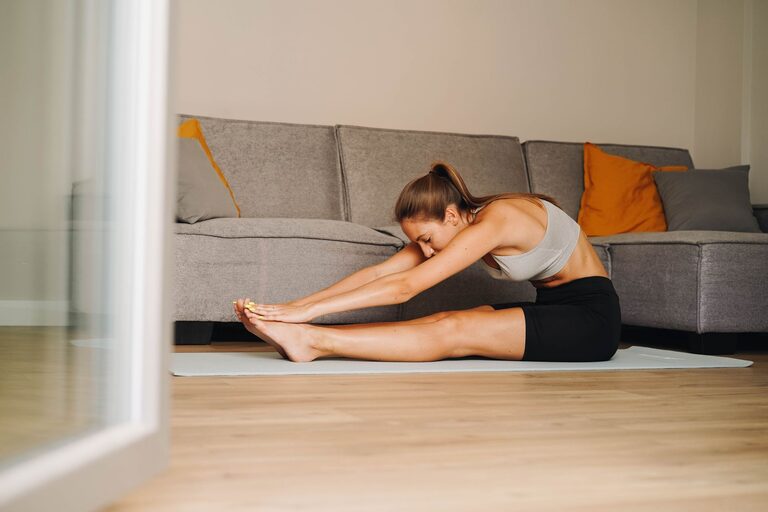
Why Gentle Stretching Can Help
Everyday activities such as sitting at a desk, walking, lifting groceries, or spending time on your feet can leave the body feeling stiff. A few simple stretches may help you move more comfortably and feel more relaxed.
You do not need special equipment or a large amount of free time. Many stretches can be done in a small space using a wall, chair, or towel for support. The key is to move slowly, breathe steadily, and avoid forcing your body into a position.
This routine is designed for general comfort and mobility. It is not a substitute for professional guidance. If a movement causes sharp pain, numbness, dizziness, or unusual discomfort, stop and seek advice from a qualified professional.
How to Stretch Safely at Home
Before beginning, keep a few simple guidelines in mind:
– Move gently rather than bouncing.
– Stretch only to a mild pulling sensation.
– Breathe slowly and avoid holding your breath.
– Keep your movements controlled.
– Use a sturdy chair or wall when you need extra balance.
– Stop if you feel pain, tingling, numbness, or sudden discomfort.
– Begin with a short session and increase gradually.
You can stretch after a few minutes of easy movement, such as walking around your home or gently swinging your arms. Warm muscles are often more comfortable to move than completely still muscles.
1. Neck and Shoulder Stretch
This easy stretch can be useful after reading, working at a computer, or looking down at a phone.
How to do it
- Sit or stand tall with your shoulders relaxed.
- Slowly lower your right ear toward your right shoulder.
- Keep both shoulders facing forward.
- Hold for 15 to 20 seconds.
- Return to the starting position and repeat on the other side.
Next, try a gentle shoulder roll. Lift your shoulders toward your ears, move them back, and then lower them. Repeat five times, then reverse the direction.
Keep the movement smooth. Do not pull on your head or press your neck into a deeper position.
2. Chest Opener
A chest opener can be a comfortable way to counter long periods of sitting or rounded shoulder posture.
How to do it
- Stand near a wall or sit upright in a chair.
- Bring your hands behind your back and gently clasp them, if comfortable.
- Draw your shoulders slightly back and down.
- Lift your hands a small amount without straining.
- Hold for 15 to 20 seconds while breathing normally.
If clasping your hands is difficult, place your hands on your lower back or hold a towel between them. Keep your ribs relaxed and avoid arching your lower back.
3. Upper Back Stretch
This stretch targets the area between the shoulder blades and can be done from a chair.
How to do it
- Sit with both feet on the floor.
- Reach your arms forward and interlace your fingers.
- Gently round your upper back as if reaching toward an imaginary wall.
- Allow your head to follow naturally without forcing it down.
- Hold for 15 to 20 seconds.
Try to keep the movement in your upper back rather than collapsing through your lower back. Return to an upright position slowly.
4. Standing Side Stretch
A side stretch adds gentle movement through the sides of your torso.
How to do it
- Stand with your feet about hip-width apart.
- Raise your right arm overhead.
- Slowly lean to the left while keeping both feet grounded.
- Hold for 15 to 20 seconds.
- Return to center and repeat on the other side.
Imagine creating length through the side of your body instead of folding forward. Keep your shoulders relaxed and avoid twisting.
5. Hip Flexor Stretch
The front of the hips can feel tight after sitting for a long time. This standing version requires only a wall or chair for balance.
How to do it
- Stand tall and place your left hand on a wall or sturdy chair.
- Step your right foot back a comfortable distance.
- Keep both feet pointing forward.
- Slightly bend your front knee and gently shift your weight forward.
- Keep your back heel lifted or lower it if that feels comfortable.
- Hold for 15 to 20 seconds, then switch sides.
Keep your upper body upright. The stretch should feel mild across the front of the hip of the leg that is behind you.
6. Hamstring Stretch
The muscles along the back of the thighs may feel tight after sitting or certain daily activities. A chair-supported version is simple and controlled.
How to do it
- Stand behind a sturdy chair and hold the back for support.
- Place your right heel on the floor a short distance in front of you.
- Keep your right leg mostly straight and bend your left knee slightly.
- Hinge forward from your hips until you feel a gentle stretch behind your right thigh.
- Hold for 15 to 20 seconds, then switch sides.
Keep your back long rather than rounding deeply. Adjust the distance of your heel to make the stretch more comfortable.
7. Calf Stretch
Calf stretches can fit easily into a daily routine, especially after walking or standing.
How to do it
- Face a wall and place both hands against it.
- Step your right foot back.
- Keep your right heel on the floor and your toes pointing forward.
- Bend your front knee and gently lean toward the wall.
- Hold for 15 to 20 seconds, then switch sides.
For a slightly different position, bend the back knee a little while keeping the heel down. Use small adjustments and avoid bouncing.
8. Seated Figure Four Stretch
This seated stretch gently opens the outer hip area and can be done on a firm chair.
How to do it
- Sit near the front edge of the chair with both feet on the floor.
- Place your right ankle over your left thigh.
- Keep your back comfortably straight.
- If it feels appropriate, lean forward slightly from your hips.
- Hold for 15 to 20 seconds, then change sides.
Do not press down on the raised knee. If this position feels uncomfortable, keep the foot on the floor and choose another stretch.
Create a Routine That Fits Your Day
A stretching routine is easier to maintain when it is connected to a regular habit. You might stretch:
– After waking up
– During a work break
– After a walk
– While waiting for water to boil
– Before relaxing in the evening
Start with three or four stretches and spend about 15 to 20 seconds on each side. As the routine becomes familiar, you can add more movements or repeat the sequence once or twice.
Consistency matters more than intensity. A short, comfortable routine performed regularly may be easier to maintain than an occasional long session that leaves you feeling strained.
Listen to Your Body
Stretching should feel controlled and manageable. Mild tension is common, but sharp, burning, or worsening discomfort is a sign to stop. Avoid comparing your flexibility with someone else’s. Bodies move differently, and comfort is a better guide than reaching a particular position.
Move at a steady pace, use support when needed, and give yourself time to build confidence. With a few minutes of gentle movement, you can create a simple home habit that supports more comfortable everyday activity.